A steady first step · sudden back pain

You don’t have to force your way upright.

A new back injury can make even standing feel hard. Start with comfort, keep movements small, and get the right help.

See what to do next
YOUR NEXT STEP

Get medical advice today.

Because standing upright is difficult after a new back injury, call your doctor or an urgent-care clinic today—especially if the pain is severe, getting worse, or walking feels unsafe.

Seek urgent advice now for fever or chills, feeling unwell, rapidly worsening pain, or new leg weakness or numbness.

Until you’re assessed, don’t push through a stretch or try to “pop” your back.
EMERGENCY SIGNS

Get emergency help now if you have:

  • New numbness around the groin, genitals, or buttocks
  • New trouble peeing or controlling your bladder or bowels
  • New weakness or numbness in both legs
  • Back pain after a serious crash or fall

Call 911 or go to an emergency department. Don’t drive yourself if you feel weak or unsteady.

WHILE YOU ARRANGE CARE

Choose comfort over “fixing” it.

There isn’t one perfect posture. Pick the position that eases the pain, and change it gently.

01

Get supported

Try lying on your side with a pillow between your knees, or on your back with knees supported. If getting down or back up is difficult, skip the floor and ask for help.

02

Try wrapped heat or ice

Use whichever feels better, with a towel between pack and skin. Try 10–15 minutes; check your skin and stop if it feels irritated or numb.

03

Keep activity tiny

Avoid staying in bed for long stretches, but don’t force walking. Take a few easy steps only if you feel steady; avoid lifting, twisting, or repeated bending for now.

04

Be cautious with medicine

Over-the-counter pain relievers aren’t safe for everyone. Ask a pharmacist or clinician what fits your health and other medicines, and follow the label.

OPTIONAL · ONLY IF COMFORTABLE

Not a stretch challenge.

Since standing is difficult, arrange care first. Skip these if changing position hurts or is hard. Keep the range tiny; stop right away if pain increases, travels down a leg, or you notice tingling, numbness, or weakness.

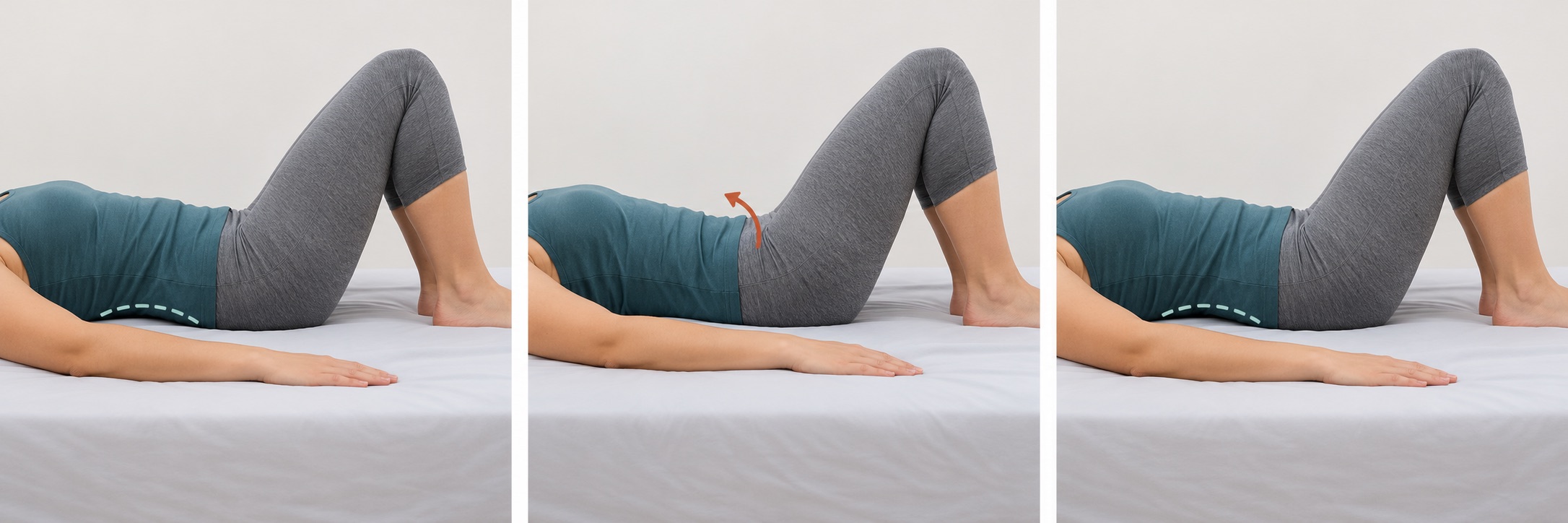
OPTION 1 · TINY PELVIC ROCK

Flatten a little, then relax

Only try this if you have arranged care and lying on your back with knees bent feels comfortable. Keep the movement small; do not lift your hips.

Three side views: start lying on your back with knees bent; gently settle the lower back toward the bed; then relax back to the starting position.
1 Start2 Tiny move3 Relax
  1. 1Start: Lie on your back, knees bent and feet supported.
  2. 2Move: As you breathe out, gently let your lower back settle toward the bed. Don’t lift your hips.
  3. 3Relax: Return to a comfortable resting position. One easy try is enough; you do not need to repeat it.
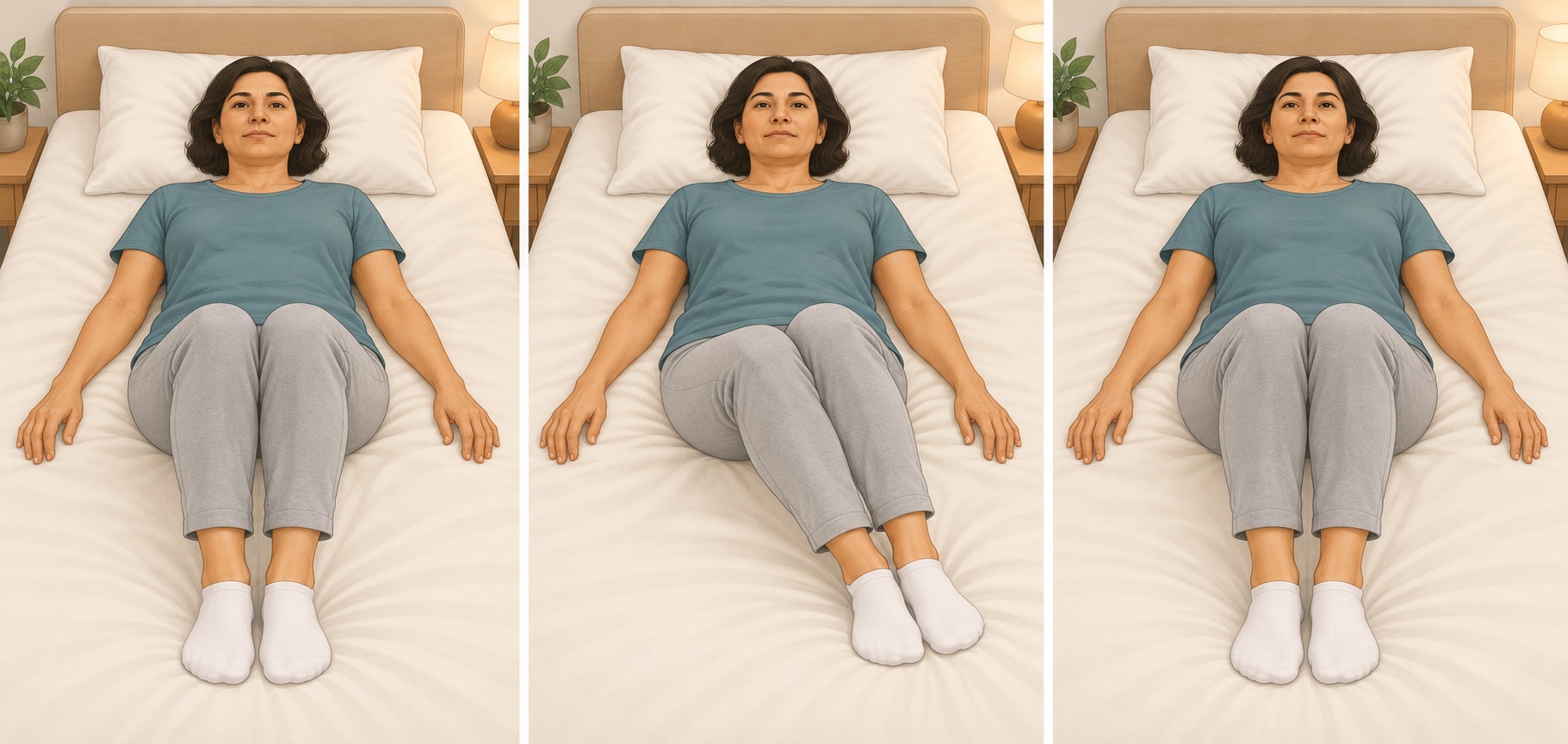
OPTION 2 · SMALL KNEE SWAY

Move together, just a little

Only try this if lying on your back with knees bent is comfortable. The middle picture shows a small movement; shoulders stay relaxed.

Three overhead views: knees bent in the middle; knees move together a few inches to one side; knees return to the middle.
1 Start2 Sway a little3 Return
  1. 1Start: Lie on your back with knees bent and feet supported.
  2. 2Sway: Let both knees drift a few inches to one side; keep your shoulders relaxed.
  3. 3Return: Bring knees back to the middle. Skip the other side unless it feels easy.

Stop rather than “work through” pain. New leg weakness, numbness, or bladder/bowel changes need urgent medical attention.

ONE THING TO DO NOW

Call for same-day advice. Let comfort—not a stretch—set the pace.

Back to the top